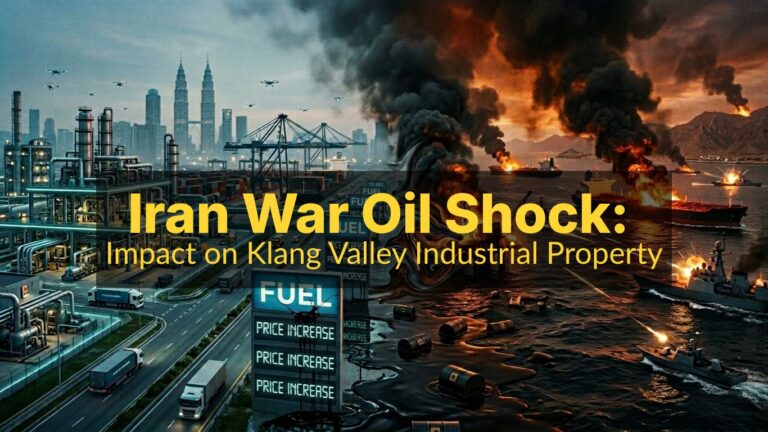
The world entered 2026 juggling multiple simultaneous conflicts each one sending economic shockwaves into supply chains, energy markets, and property values globally.
Here’s the quick summary:
US–Israel–Iran War (February 2026 — ongoing):
US and Israeli forces launched strikes on Iran on 28 February 2026, triggering widespread Iranian retaliation.
The Strait of Hormuz through which 20% of the world’s daily oil supply passes was effectively shut down as Iran targeted tanker traffic.
Brent crude surged past US$100/barrel, from US$70+ within a month.
Qatar declared force majeure on gas exports.
Airline routes across the Middle East were cancelled.
The World Economic Forum described this as the greatest global energy security challenge in modern history.
US–China Trade War (2018 — ongoing):
America’s escalating tariffs on Chinese goods continue to push global manufacturers out of China.
Malaysia has been a prime beneficiary, with over RM30.5 billion in new manufacturing investments approved in Q1 2025 alone — 84% from foreign companies.
Malaysia was briefly hit with a 24% US tariff (now paused at 10%).
Russia–Ukraine War (2022 — ongoing):
Now in its fourth year, this war continues to strain global energy and food supply chains, keeping construction costs and inflation elevated worldwide.